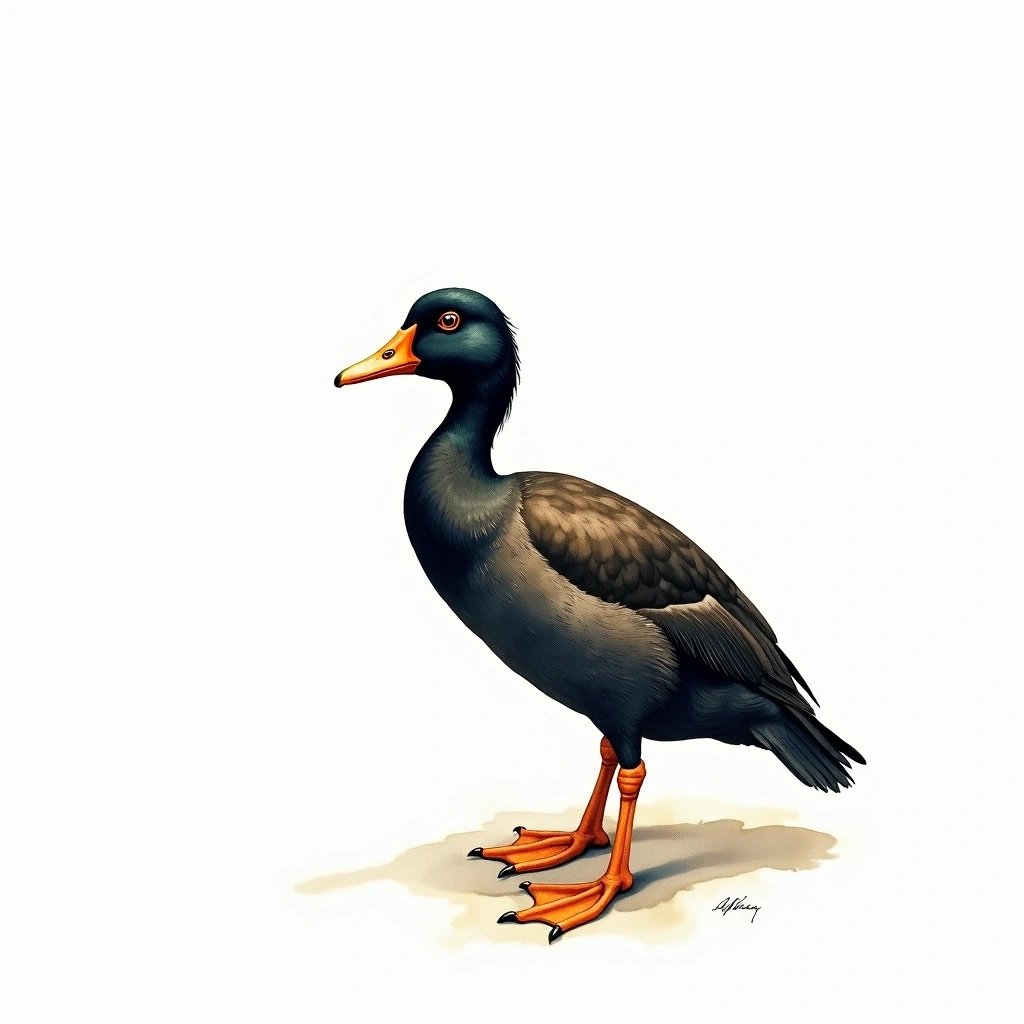
African Black Duck
Anas sparsa
Embed This Widget
Add the script tag and a data attribute to embed this widget.
<script src="https://cdn.jsdelivr.net/npm/birdfyi-embed@1/dist/embed.min.js" defer></script>
<div data-birdfyi="bird" data-slug="anas-sparsa"></div>Embed via iframe for maximum compatibility.
<iframe src="https://birdfyi.com/iframe/bird/anas-sparsa/" width="420" height="400" frameborder="0" style="border:0;border-radius:10px;max-width:100%" loading="lazy"></iframe>Paste this URL in WordPress, Medium, or any oEmbed-compatible platform.
https://birdfyi.com/bird/anas-sparsa/Add a dynamic SVG badge to your README or docs.
[](https://birdfyi.com/bird/anas-sparsa/)Use the native HTML custom element.
<script src="https://cdn.jsdelivr.net/npm/birdfyi-embed@1/dist/embed.min.js" defer></script>
<birdfyi-bird slug="anas-sparsa"></birdfyi-bird>Bold white spotting across a blackish-brown back distinguishes the African Black Duck (Anas sparsa), a medium-sized member of the family Anatidae. The plumage carries an iridescent blue-green speculum bordered in white, and the sexes are alike; the bill is dark and the legs orange. The species is a fast-water specialist, holding territory along rocky rivers, mountain gorges and waterfalls from sea level to about 4,000 m across sub-Saharan Africa, from Ethiopia and Kenya south to the Cape, where it requires clear turbulent water broken by boulders. Pairs are monogamous and defend stretches of river against intruders. Recorded birds average about 997 g with a wingspan near 49.5 cm. The IUCN Red List rates the species Least Concern.
On this page
Acerca de
El pato africano moteado es un pato de tamaño mediano de color marrón oscuro con motas blancas en el pecho y los flancos. Habita en ríos de rápido caudal, cascadas y arroyos de montaña en África central y meridional, siendo inusual entre los patos por su preferencia por aguas corrientes y turbulentas. También se encuentra en altitudes elevadas en las zonas montañosas de África oriental.
Physical Description
| Measurement | Value | Imperial |
|---|---|---|
| Envergadura | 49,5 cm | 19.5 in |
| Peso | 996,8333333333334 g | 35.16 oz |
Identificación
Plumaje
Dark blackish-brown plumage with bold white spots on back and scapulars. Iridescent blue-green speculum with white borders. Head dark with pale spots. Bill and legs dark gray. Sexes similar. Fast-flowing river specialist.
Habitat & Range
Fast-flowing rocky rivers and streams, mountain gorges, and waterfalls from sea level to 4,000 m across sub-Saharan Africa from Ethiopia and Kenya south to the Cape. Requires clear turbulent water with boulders.
Estado de conservación
Comportamiento y reproducción
Nidificación
Incubation: 25-28 days. Fledging: 86 days.
Tamaño de la puesta
4-9
Sonido
Canto
Produces a harsh, resonant quacking call; alarm is a loud, emphatic quack repeated rapidly. Both sexes call with strong quacking; pairs duet with synchronized calls along African rivers.
Taxonomía
| Kingdom | Animalia |
| Phylum | Chordata |
| Class | Aves |
| Orden | Anseriformes (Aves Acuáticas) |
| Familia | Anatidae (Patos, Gansos y Cisnes) |
| Genus | Anas |
| Especies | Anas sparsa |
Distribution
African Black Duck has been recorded in 5 countries.
countries highlighted
External Databases
Preguntas frecuentes
Where does the African Black Duck live?
Is the African Black Duck endangered?
How does the African Black Duck nest?
What does the African Black Duck sound like?
How big is the African Black Duck?
What order and family does the African Black Duck belong to?
Similar Birds
Other species in the Anatidae family