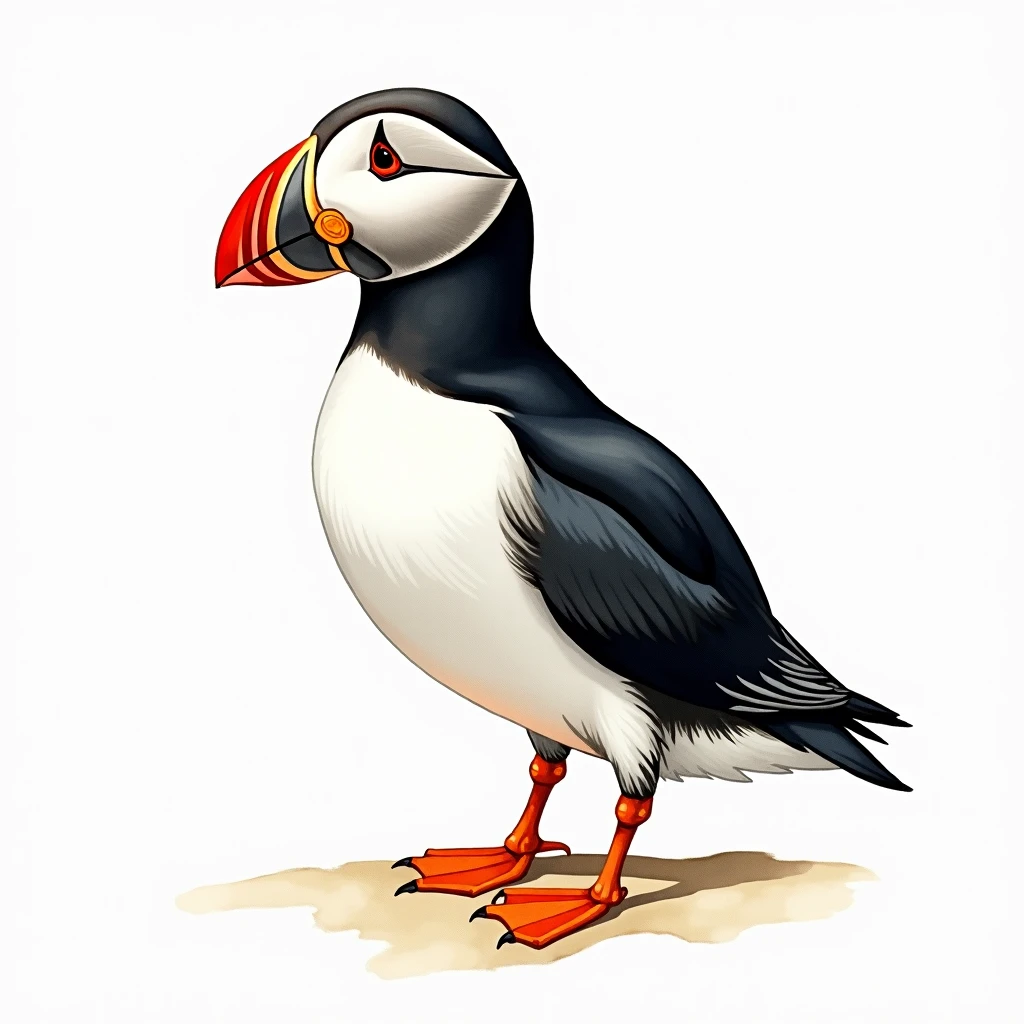
Atlantic Puffin
Fratercula arctica
Embed This Widget
Add the script tag and a data attribute to embed this widget.
<script src="https://cdn.jsdelivr.net/npm/birdfyi-embed@1/dist/embed.min.js" defer></script>
<div data-birdfyi="bird" data-slug="atlantic-puffin"></div>Embed via iframe for maximum compatibility.
<iframe src="https://birdfyi.com/iframe/bird/atlantic-puffin/" width="420" height="400" frameborder="0" style="border:0;border-radius:10px;max-width:100%" loading="lazy"></iframe>Paste this URL in WordPress, Medium, or any oEmbed-compatible platform.
https://birdfyi.com/bird/atlantic-puffin/Add a dynamic SVG badge to your README or docs.
[](https://birdfyi.com/bird/atlantic-puffin/)Use the native HTML custom element.
<script src="https://cdn.jsdelivr.net/npm/birdfyi-embed@1/dist/embed.min.js" defer></script>
<birdfyi-bird slug="atlantic-puffin"></birdfyi-bird>The colourful triangular bill of the breeding Atlantic Puffin — banded in orange, blue, and yellow — is shed to a duller, smaller form in winter, when the face also darkens. Black above and white below with a pale face, it swims underwater using its wings for propulsion and can carry several small fish, such as sand eels, herring, and capelin, crosswise in the bill. It breeds on grassy cliff tops and offshore islands of the North Atlantic, from eastern Canada to Iceland, Norway, and northwest Russia, and spends the winter entirely at sea. A single egg is laid in a burrow or crevice, incubated for 36 to 45 days, with the chick fledging between 34 and 57 days. At the colony it gives a low, moaning growl, but at sea it is silent. It is listed as Vulnerable.
On this page
について
「海のピエロ」とも呼ばれるニシツノメドリは、北海の崖に穴を掘って営巣する魅力的な海鳥。口蓋に後ろ向きの棘があるため、一度に12匹もの魚を横向きにくわえて運ぶことができる。気候変動と乱獲による餌不足が脅威となり、個体数が減少している。
Physical Description
| Measurement | Value | Imperial |
|---|---|---|
| Body Length | 30.0 cm | 11.8 in |
| 翼開長 | 56.0 cm | 22.0 in |
| 体重 | 380.0 g | 13.40 oz |
識別
羽毛
Black upperparts and white underparts with a distinctive white face. In breeding season, the face brightens and colourful bill plates develop. Winter plumage is duller with a darker face.
くちばし
Large, laterally compressed, triangular bill — bright orange, blue, and yellow in breeding season
Habitat & Range
Breeds on grassy cliff tops and offshore islands. Spends winter entirely at sea in the North Atlantic.
分布域
North Atlantic from eastern Canada and northeastern United States to Iceland, Norway, and northwest Russia.
Diet & Feeding
Small fish, especially sand eels, herring, and capelin. Dives underwater using wings for propulsion, catching multiple fish per dive.
保全状況
行動と繁殖
営巣
Nest type: BU,CR. Incubation: 36-45 days. Fledging: 34-57 days.
一腹卵数
1
鳴き声
さえずり
At burrow gives a low, moaning 'arr-arr-arr' growl. Silent at sea. At breeding colonies produces a series of grunting croaks. Chicks give soft peeping calls.
分類学
| Kingdom | Animalia |
| Phylum | Chordata |
| Class | Aves |
| 目 | Charadriiformes (Shorebirds & Gulls) |
| 科 | Alcidae (Auks & Puffins) |
| Genus | Fratercula |
| 種 | Fratercula arctica |
Names in Other Languages
| Language | Name |
|---|---|
| German | Papageitaucher |
| Spanish | Frailecillo Atlántico |
Distribution
Atlantic Puffin has been recorded in 5 countries.
countries highlighted
External Databases
よくある質問
What does the Atlantic Puffin eat?
Where does the Atlantic Puffin live?
Is the Atlantic Puffin endangered?
How does the Atlantic Puffin nest?
What does the Atlantic Puffin sound like?
How big is the Atlantic Puffin?
What order and family does the Atlantic Puffin belong to?
Similar Birds
Other species in the Alcidae family