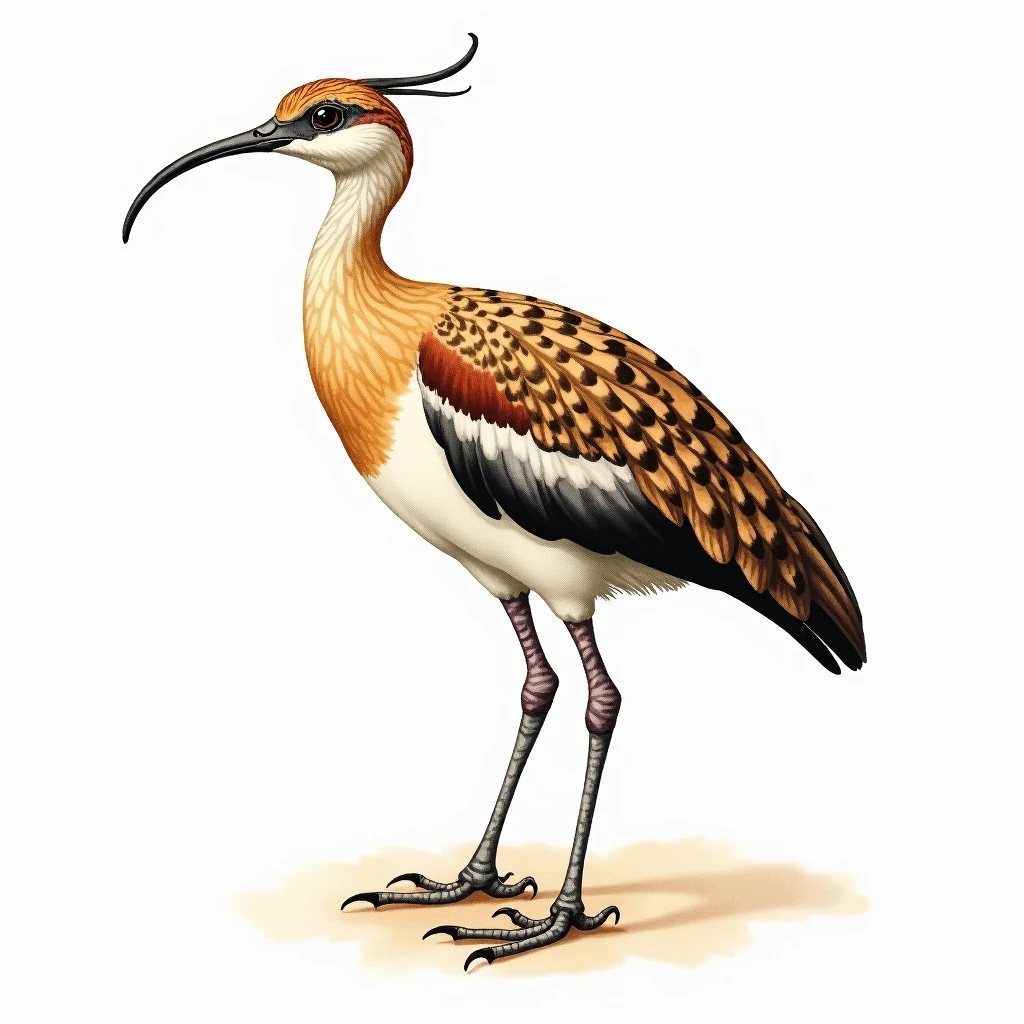
Australian Bustard
Ardeotis australis
Embed This Widget
Add the script tag and a data attribute to embed this widget.
<script src="https://cdn.jsdelivr.net/npm/birdfyi-embed@1/dist/embed.min.js" defer></script>
<div data-birdfyi="bird" data-slug="ardeotis-australis"></div>Embed via iframe for maximum compatibility.
<iframe src="https://birdfyi.com/iframe/bird/ardeotis-australis/" width="420" height="400" frameborder="0" style="border:0;border-radius:10px;max-width:100%" loading="lazy"></iframe>Paste this URL in WordPress, Medium, or any oEmbed-compatible platform.
https://birdfyi.com/bird/ardeotis-australis/Add a dynamic SVG badge to your README or docs.
[](https://birdfyi.com/bird/ardeotis-australis/)Use the native HTML custom element.
<script src="https://cdn.jsdelivr.net/npm/birdfyi-embed@1/dist/embed.min.js" defer></script>
<birdfyi-bird slug="ardeotis-australis"></birdfyi-bird>The Australian Bustard (Ardeotis australis) is a bird species in the family Otididae (bustards), within the order Otidiformes (bustards). Recorded measurements include a wingspan of 118.5 cm and a weight of 4.6 kg. The IUCN Red List classifies it as Least Concern.
On this page
About
A large bustard (up to 120 cm, 3-8 kg) found across open grasslands and woodland of Australia. Sandy-brown plumage with black crown and neck markings. Australia's heaviest flying bird. Omnivore of grasslands. Males perform an impressive balloon-like throat display during courtship.
Physical Description
| Measurement | Value | Imperial |
|---|---|---|
| Wingspan | 118.5 cm | 46.7 in |
| Weight | 4570.0 g | 161.20 oz |
Habitat & Range
Geographic Range
Found across open grasslands and woodland of Australia, including arid interior regions. Resident and nomadic.
Diet & Feeding
Omnivore of Australian open country; eats insects, small reptiles, seeds, and green vegetation. Beetles, locusts, and grasshoppers predominate.
Conservation Status
Behavior & Breeding
Nesting
Nest type: NO. Incubation: 23-24 days.
Clutch Size
1-3
Sound
Song
Loud, low booming call with hollow quality; deep resonant sound carrying across open African semi-desert terrain.
Taxonomy
| Kingdom | Animalia |
| Phylum | Chordata |
| Class | Aves |
| Order | Otidiformes (Bustards) |
| Family | Otididae (Bustards) |
| Genus | Ardeotis |
| Species | Ardeotis australis |
Distribution
Australian Bustard has been recorded in 1 countries.
countries highlighted
External Databases
Frequently Asked Questions
What does the Australian Bustard eat?
Where does the Australian Bustard live?
Is the Australian Bustard endangered?
How does the Australian Bustard nest?
What does the Australian Bustard sound like?
How big is the Australian Bustard?
What order and family does the Australian Bustard belong to?
Similar Birds
Other species in the Otididae family