Heaviest Birds in the World
25 birds · 20–320 cm wingspan · 9.0–107.9 kg
Among flying birds, weight is a critical constraint that shapes every aspect of anatomy: wing loading, muscle mass, bone density, and metabolic rate. Heavier flyers tend to rely on thermal soaring or running takeoffs rather than vertical launches. Penguins, though flightless in air, are heavy for a reason — their weight aids deep diving in cold oceans.
This ranking lists the heaviest birds by body mass. Weights are drawn from field measurements and ornithological databases. Where males and females differ significantly, the heavier sex (typically male) is represented.
How we ranked these
Ranked by body weight in grams. Measurements are based on the heavier sex where dimorphism exists. Data from field studies and ornithological databases.

Ostriches · Vulnerable
A slightly smaller ratite than the Common Ostrich with distinctive blue-grey neck and thigh skin in breeding males. Flightless and capable of speeds up to 70 km/h. Native to the Horn of Africa—Somalia

Ostriches · Least Concern
The common ostrich is the world's largest living bird, standing up to 2.7 meters tall and weighing up to 145 kg. Despite being flightless, it is the fastest bird on land, sprinting at speeds up to 70

Cassowaries · Least Concern
The southern cassowary is often called the most dangerous bird in the world due to its powerful legs and dagger-like inner claw that can reach 12 cm in length. Despite this reputation, cassowaries are
-
 Northern Cassowary
Cassowaries · Least Concern
A large flightless bird of lowland New Guinea with a tall orange-yellow casque, bare blue-and-red neck skin, and one long pendant wattle. Solitary and aggressive when threatened. Feeds mainly on falle
53 cm 47.0 kg Least ConcernSee details → -
 Emu
EmuEmus · Least Concern
The emu is the second-tallest living bird and the largest bird native to Australia. It is the only bird with calf muscles, enabling powerful running at up to 50 km/h. In the famous Emu War of 1932, th
20 cm 45.0 kg Least Concern 175 cm lengthSee details → -
 Emperor Penguin
Penguins · Near Threatened
The emperor penguin is the tallest and heaviest of all penguin species. They breed in the harshest conditions on Earth, enduring Antarctic winter temperatures of -60 C and wind speeds of 200 km/h. Mal
76 cm 30.0 kg Near Threatened 115 cm lengthSee details → -
 Dwarf Cassowary
Cassowaries · Least Concern
The smallest cassowary reaching about 1 m in height, with glossy black plumage, a low casque, and two red wattles. Flightless and solitary, navigating dense montane rainforest with its casque used as
43 cm 26.3 kg Least ConcernSee details → -
 Greater Rhea
Rheas · Near Threatened
South America's largest bird, standing up to 1.5 m tall with fluffy grey-brown plumage and long, powerful legs. Flightless, fast-running, and omnivorous—eating plants, insects, and small vertebrates.
121 cm 25.2 kg Near ThreatenedSee details → -
 Rodrigues Solitaire
Pigeons & Doves · Extinct
Extinct flightless pigeon of Rodrigues Island, 70–90 cm and up to 28 kg. Sexually dimorphic; males bore bony wing knobs used in combat. Fed on fruits and seeds on the forest floor. Extinct by ~1730–17
22.5 kg ExtinctSee details → -
 Lesser Rhea
Rheas · Least Concern
Smaller than the Greater Rhea, with pale grey-brown plumage speckled with white spots on wings and back. Flightless, gregarious, and fast-running. Feeds on broad-leaved plants, roots, and small animal
126 cm 21.9 kg Least ConcernSee details → -
 Dodo
DodoPigeons & Doves · Extinct
Iconic extinct flightless pigeon of Mauritius, ~100 cm and 10–18 kg, with grey plumage, vestigial wings, and a large hooked bill. Fed on fallen fruits; fearless of humans having evolved with no natura
18.0 kg ExtinctSee details → -
 King Penguin
Penguins · Least Concern
The king penguin is the second-largest penguin species, known for its striking orange-gold head markings. Unlike most penguins, king penguins do not build nests — they incubate their single egg on the
64 cm 14.0 kg Least Concern 95 cm lengthSee details → -
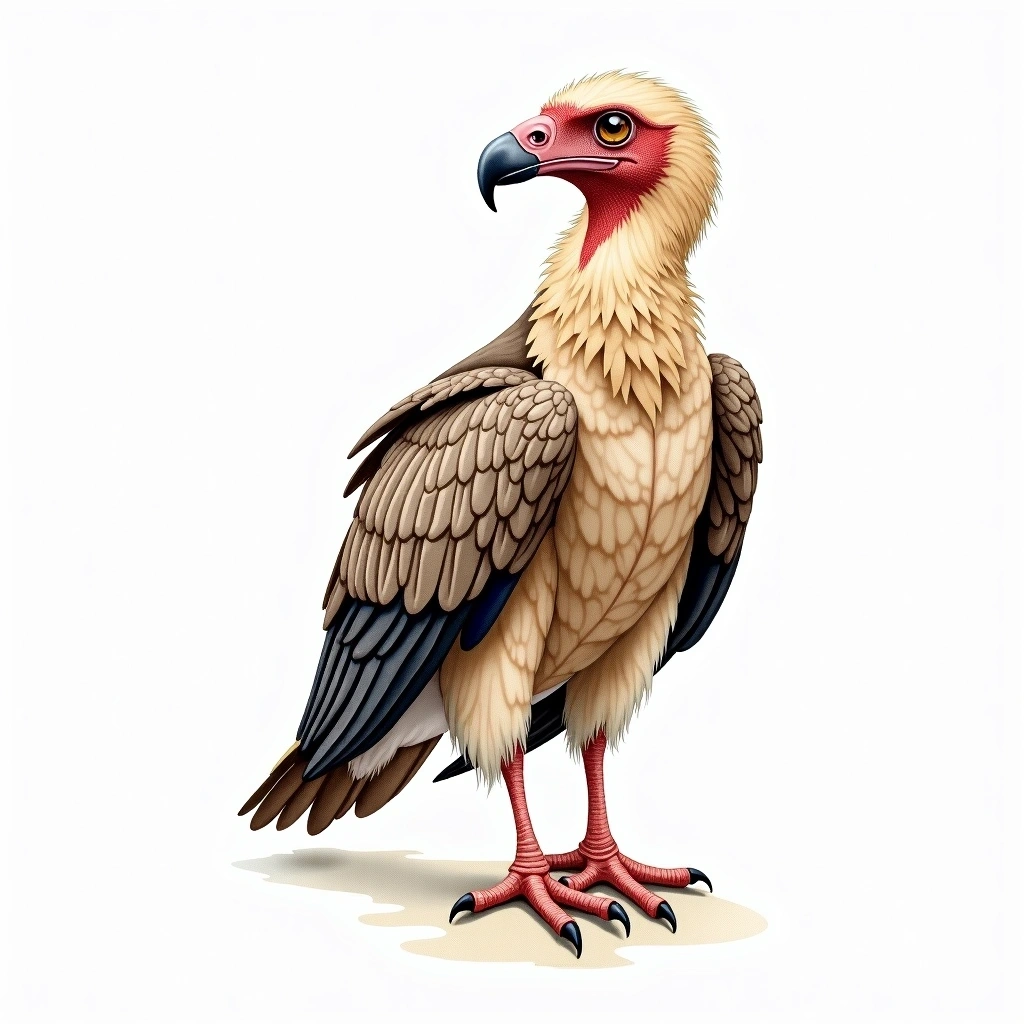 Andean Condor
New World Vultures & Condors · Vulnerable
The Andean Condor is one of the world's largest flying birds, with a massive 158 cm wingspan and weighing over 11 kg. It soars on thermal currents along the Andes, scavenging carcasses across vast ter
158 cm 11.3 kg VulnerableSee details → -
 Mute Swan
Ducks, Geese & Swans · Least Concern
The mute swan is one of the heaviest flying birds, with males weighing up to 14 kg. Despite its name, it is not truly mute, producing hissing, grunting, and snorting sounds. Mute swans form lifelong p
235 cm 11.0 kg Least Concern 152 cm lengthSee details → -
 Whooper Swan
Ducks, Geese & Swans · Least Concern
A large all-white swan with a long neck and a distinctive yellow-and-black bill pattern—a large yellow wedge extending to the nostrils. The national bird of Finland. Calls with a bugling whooping reso
116 cm 10.3 kg Least ConcernSee details → -
 Dalmatian Pelican
Pelicans · Near Threatened
137 cm 10.3 kg Near ThreatenedSee details → -
 Himalayan Griffon
Hawks, Eagles & Kites · Near Threatened
152 cm 10.0 kg Near ThreatenedSee details → -
 Trumpeter Swan
Ducks, Geese & Swans · Least Concern
North America's largest native waterfowl and one of the heaviest flying birds, with all-white plumage, a long neck, and all-black bill. Named for its resonant bugling call. Recovered from near extinct
125 cm 10.0 kg Least ConcernSee details → -
 Cinereous Vulture
Hawks, Eagles & Kites · Near Threatened
The Cinereous Vulture (<em>Aegypius monachus</em>), also known as the Black Vulture or Monk Vulture, is a very large Old World vulture in the family Accipitridae (Hawks, Eagles & Kites). It inhabits f
147 cm 9.6 kg Near ThreatenedSee details → -
 Great White Pelican
Pelicans · Least Concern
129 cm 9.6 kg Least ConcernSee details → -
 Kori Bustard
Bustards · Near Threatened
Africa's heaviest flying bird (up to 135 cm, 11-19 kg). Found in open grasslands and savanna of eastern and southern Africa. Grey-brown plumage with a black crest. Omnivore, feeding on insects, small
142 cm 9.3 kg Near ThreatenedSee details → -
 California Condor
New World Vultures & Condors · Critically Endangered
158 cm 9.3 kg Critically EndangeredSee details → -
 Greater Adjutant
Storks · Near Threatened
145–150 cm, wingspan 210–250 cm. Enormous; naked red head; huge ivory bill; large pendant neck pouch. Endangered; fewer than 1,000 birds remain in South and Southeast Asia. Breeds in Assam (India) and
152 cm 9.1 kg Near ThreatenedSee details → -
 Wandering Albatross
Albatrosses · Vulnerable
The wandering albatross has the largest wingspan of any living bird, reaching up to 3.5 meters. These oceanic nomads can circumnavigate the globe, covering over 120,000 km per year using dynamic soari
320 cm 9.0 kg Vulnerable 117 cm lengthSee details → -
 Cape Vulture
Hawks, Eagles & Kites · Vulnerable
137 cm 9.0 kg VulnerableSee details →