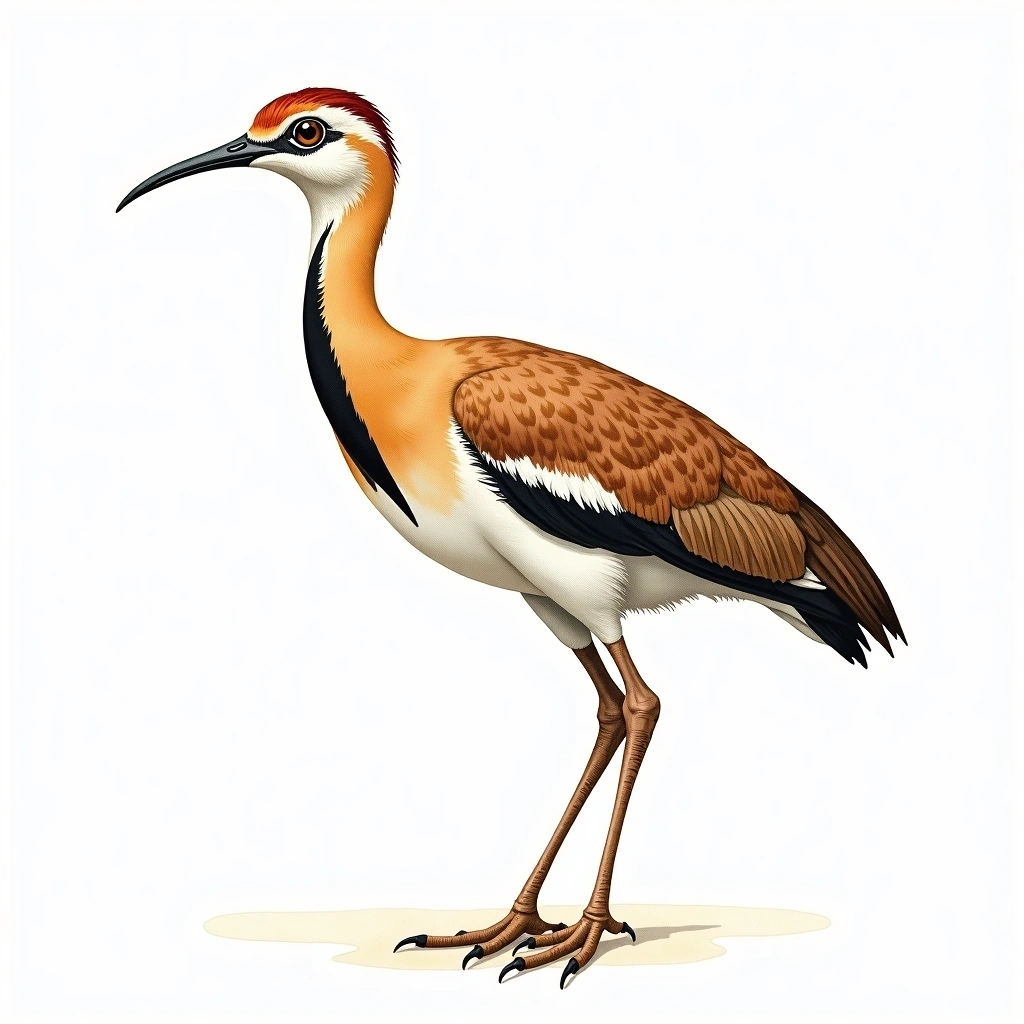
Arabian Bustard
Ardeotis arabs
Embed This Widget
Add the script tag and a data attribute to embed this widget.
<script src="https://cdn.jsdelivr.net/npm/birdfyi-embed@1/dist/embed.min.js" defer></script>
<div data-birdfyi="bird" data-slug="ardeotis-arabs"></div>Embed via iframe for maximum compatibility.
<iframe src="https://birdfyi.com/iframe/bird/ardeotis-arabs/" width="420" height="400" frameborder="0" style="border:0;border-radius:10px;max-width:100%" loading="lazy"></iframe>Paste this URL in WordPress, Medium, or any oEmbed-compatible platform.
https://birdfyi.com/bird/ardeotis-arabs/Add a dynamic SVG badge to your README or docs.
[](https://birdfyi.com/bird/ardeotis-arabs/)Use the native HTML custom element.
<script src="https://cdn.jsdelivr.net/npm/birdfyi-embed@1/dist/embed.min.js" defer></script>
<birdfyi-bird slug="ardeotis-arabs"></birdfyi-bird>The Arabian Bustard (Ardeotis arabs) is a bird species in the family Otididae (avutardas), within the order Otidiformes (avutardas). Recorded measurements include a wingspan of 107.9 cm and a weight of 6.7 kg. The IUCN Red List classifies it as Near Threatened.
On this page
Acerca de
A very large bustard (up to 90 cm, 7-15 kg) found in dry grasslands and semi-desert across North Africa and the Arabian Peninsula. Sandy-brown plumage with a distinctive black crown. Omnivore of open arid habitats. Classified as Near Threatened due to hunting and habitat loss.
Physical Description
| Measurement | Value | Imperial |
|---|---|---|
| Envergadura | 107,9 cm | 42.5 in |
| Peso | 6733,333333333333 g | 237.51 oz |
Habitat & Range
Distribución geográfica
Found in dry grasslands and semi-desert across North Africa and the Arabian Peninsula. Resident and nomadic.
Diet & Feeding
Omnivore of arid grasslands and semi-desert; takes insects, small lizards, seeds, and green shoots. Locusts and beetles are key prey.
Estado de conservación
Comportamiento y reproducción
Nidificación
Nest type: SC.
Tamaño de la puesta
1-2
Sonido
Canto
Deep, resonant booming call with carrying quality; powerful bass notes audible at impressive range across open savanna.
Taxonomía
| Kingdom | Animalia |
| Phylum | Chordata |
| Class | Aves |
| Orden | Otidiformes (Avutardas) |
| Familia | Otididae (Avutardas) |
| Genus | Ardeotis |
| Especies | Ardeotis arabs |
Distribution
Arabian Bustard has been recorded in 2 countries.
countries highlighted
External Databases
Preguntas frecuentes
What does the Arabian Bustard eat?
Where does the Arabian Bustard live?
Is the Arabian Bustard endangered?
How does the Arabian Bustard nest?
What does the Arabian Bustard sound like?
How big is the Arabian Bustard?
What order and family does the Arabian Bustard belong to?
Similar Birds
Other species in the Otididae family