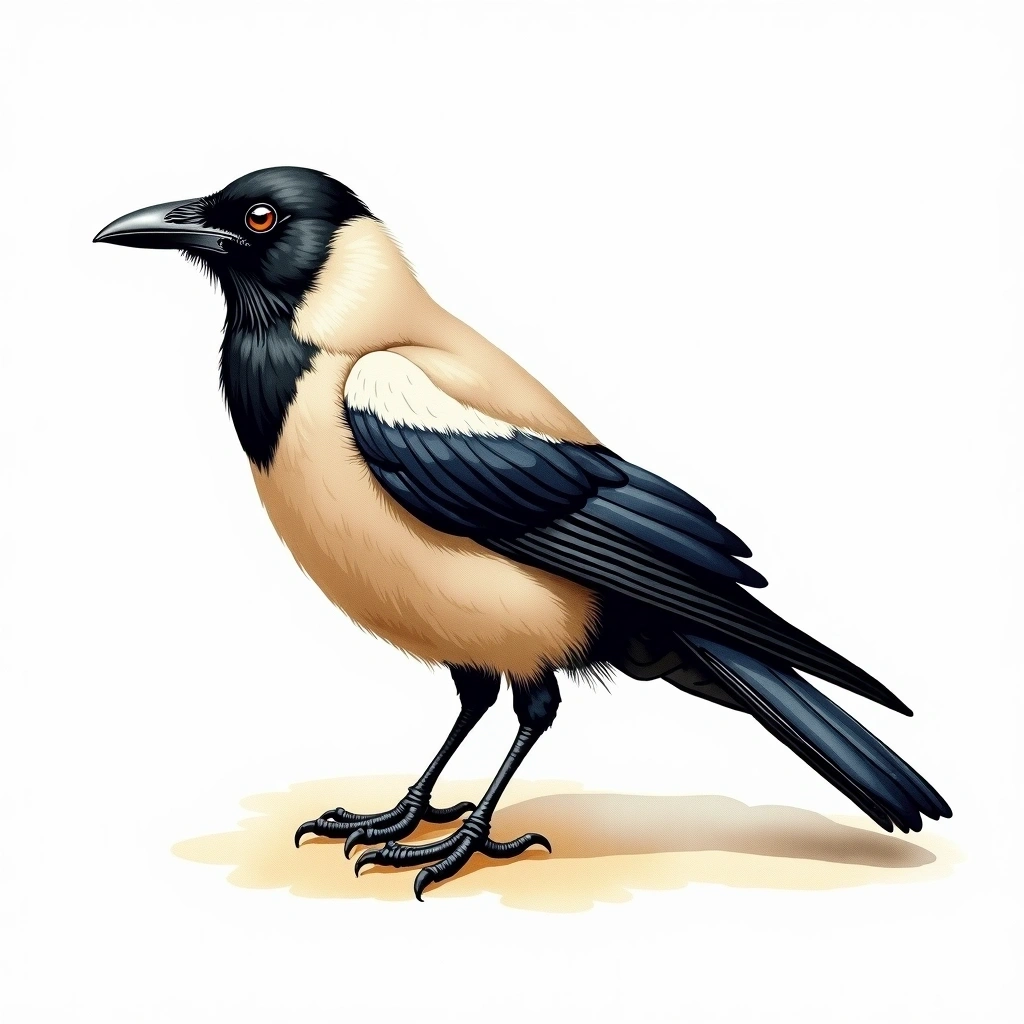
Amerikanerkrähe
Corvus brachyrhynchos
Embed This Widget
Add the script tag and a data attribute to embed this widget.
<script src="https://cdn.jsdelivr.net/npm/birdfyi-embed@1/dist/embed.min.js" defer></script>
<div data-birdfyi="bird" data-slug="american-crow"></div>Embed via iframe for maximum compatibility.
<iframe src="https://birdfyi.com/iframe/bird/american-crow/" width="420" height="400" frameborder="0" style="border:0;border-radius:10px;max-width:100%" loading="lazy"></iframe>Paste this URL in WordPress, Medium, or any oEmbed-compatible platform.
https://birdfyi.com/bird/american-crow/Add a dynamic SVG badge to your README or docs.
[](https://birdfyi.com/bird/american-crow/)Use the native HTML custom element.
<script src="https://cdn.jsdelivr.net/npm/birdfyi-embed@1/dist/embed.min.js" defer></script>
<birdfyi-bird slug="american-crow"></birdfyi-bird>All black with a faint glossy sheen, a squared tail, and a smooth throat, the American Crow is distinguished from the larger Common Raven by size and structure. It is a remarkably adaptable feeder, taking insects, earthworms, seeds, fruit, eggs, nestlings, carrion, and human food waste, and it thrives wherever people alter the landscape — farmland, open woodland, suburbs, and parking lots. Ranging from southern Canada through the United States into northern Mexico, it is highly social; family groups use distinct dialects of the classic 'caw-caw-caw', along with rattles and knocking notes. Cup nests hold three to seven eggs, incubated for 16 to 20 days, with young fledging between 29 and 43 days. Crows gather in large communal roosts outside the breeding season. It is assessed as Least Concern.
On this page
Über uns
Die Amerikanerkrähe ist einer der bekanntesten und intelligentesten Vögel Nordamerikas. Untersuchungen zeigen, dass sie einzelne menschliche Gesichter wiedererkennen und wahrgenommene Bedrohungen an andere Krähen weitergeben können. In manchen Städten bilden sie riesige Winterschlafplätze mit bis zu Hunderttausenden Individuen.
Physical Description
| Measurement | Value | Imperial |
|---|---|---|
| Body Length | 45,0 cm | 17.7 in |
| Flügelspannweite | 99,0 cm | 39.0 in |
| Gewicht | 450,0 g | 15.87 oz |
Identifizierung
Gefieder
All black with a slight glossy sheen. Squared-off tail and smooth throat distinguish it from the common raven.
Schnabel
Straight, sturdy black bill smaller than a raven's
Habitat & Range
Extremely adaptable — found in farmland, open woodland, suburban neighborhoods, parking lots, and urban parks.
Geografisches Verbreitungsgebiet
North America from southern Canada through the United States to northern Mexico.
Diet & Feeding
Highly omnivorous — insects, earthworms, seeds, fruit, eggs, nestlings, carrion, and human food waste. Among the most adaptable feeders.
Erhaltungsstatus
Verhalten & Brutverhalten
Nistverhalten
Nest type: CP. Incubation: 16-20 days. Fledging: 29-43 days.
Gelegegröße
3-7
Lautgebung
Gesang
Classic 'caw-caw-caw' repeated in series. Family groups use distinct dialects. Also gives rattling, knocking, and a short 'cah' flight call. Highly social and vocal.
Taxonomie
| Kingdom | Animalia |
| Phylum | Chordata |
| Class | Aves |
| Ordnung | Passeriformes (Sperlingsvögel) |
| Familie | Corvidae (Krähen, Häher und Elstern) |
| Genus | Corvus |
| Arten | Corvus brachyrhynchos |
Names in Other Languages
| Language | Name |
|---|---|
| German | Amerikanerkrähe |
| Spanish | Cuervo Americano |
Distribution
Amerikanerkrähe has been recorded in 2 countries.
countries highlighted
External Databases
Häufig gestellte Fragen
What does the Amerikanerkrähe eat?
Where does the Amerikanerkrähe live?
Is the Amerikanerkrähe endangered?
How does the Amerikanerkrähe nest?
What does the Amerikanerkrähe sound like?
How big is the Amerikanerkrähe?
What order and family does the Amerikanerkrähe belong to?
Similar Birds
Other species in the Corvidae family