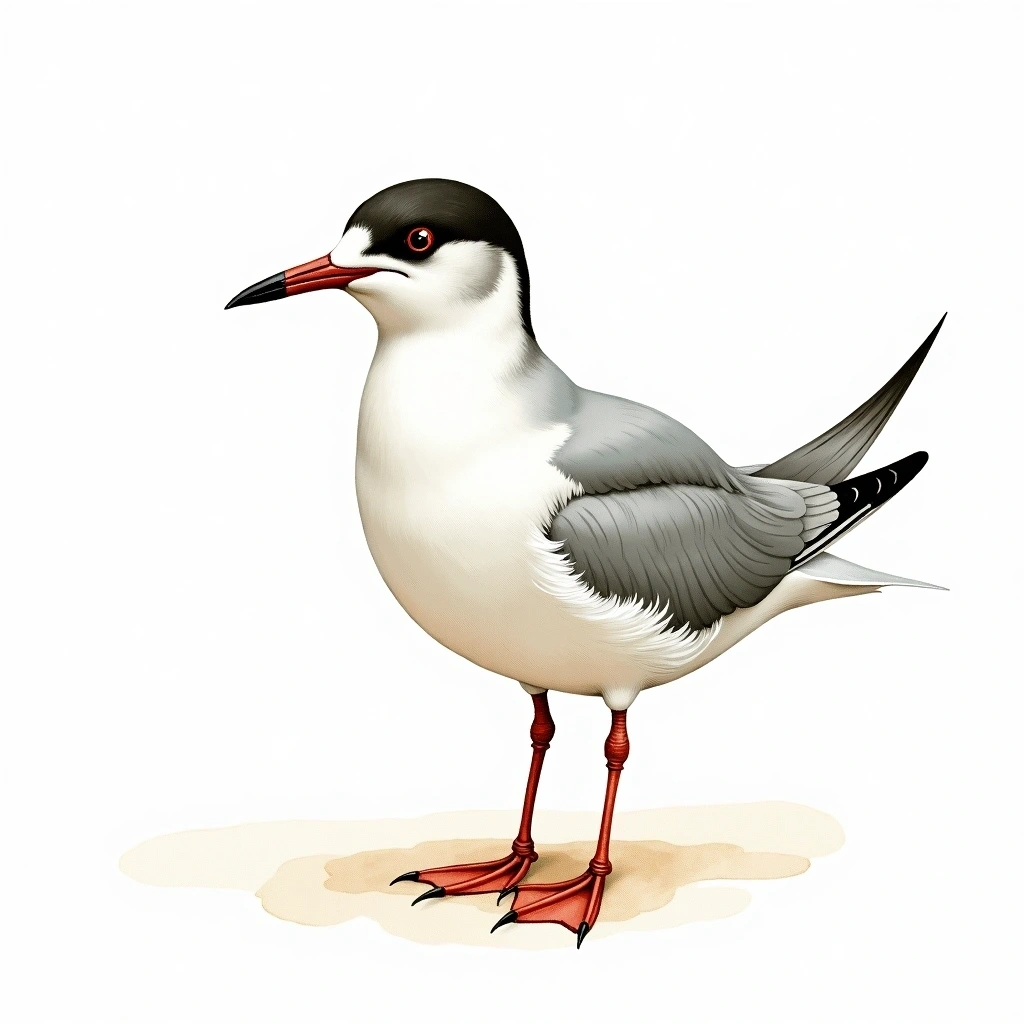
Antarctic Tern
Sterna vittata
Embed This Widget
Add the script tag and a data attribute to embed this widget.
<script src="https://cdn.jsdelivr.net/npm/birdfyi-embed@1/dist/embed.min.js" defer></script>
<div data-birdfyi="bird" data-slug="sterna-vittata"></div>Embed via iframe for maximum compatibility.
<iframe src="https://birdfyi.com/iframe/bird/sterna-vittata/" width="420" height="400" frameborder="0" style="border:0;border-radius:10px;max-width:100%" loading="lazy"></iframe>Paste this URL in WordPress, Medium, or any oEmbed-compatible platform.
https://birdfyi.com/bird/sterna-vittata/Add a dynamic SVG badge to your README or docs.
[](https://birdfyi.com/bird/sterna-vittata/)Use the native HTML custom element.
<script src="https://cdn.jsdelivr.net/npm/birdfyi-embed@1/dist/embed.min.js" defer></script>
<birdfyi-bird slug="sterna-vittata"></birdfyi-bird>The Antarctic Tern (Sterna vittata) is a bird species in the family Laridae (gulls & terns), within the order Charadriiformes (shorebirds & gulls). Recorded measurements include a wingspan of 52 cm and a weight of 151 g. The IUCN Red List classifies it as Least Concern.
On this page
À propos
Antarctic Tern, 31–38 cm, breeds on sub-Antarctic islands and Antarctic Peninsula, dispersing across the Southern Ocean in austral winter. Grey above, white below, with red bill and feet. Unlike Arctic Tern, does not undertake pole-to-pole migration; remains in high southern latitudes year-round.
Physical Description
| Measurement | Value | Imperial |
|---|---|---|
| Envergure | 52,0 cm | 20.5 in |
| Poids | 151,0 g | 5.33 oz |
Habitat & Range
Statut de conservation
Comportement et reproduction
Nidification
Nest type: SC. Incubation: 23-25 days. Fledging: 27-32 days.
Taille de la couvée
1-2
Taxonomie
| Kingdom | Animalia |
| Phylum | Chordata |
| Class | Aves |
| Ordre | Charadriiformes (Shorebirds & Gulls) |
| Famille | Laridae (Gulls & Terns) |
| Genus | Sterna |
| Espèces | Sterna vittata |
Distribution
Antarctic Tern has been recorded in 1 countries.
countries highlighted
External Databases
Foire aux questions
Is the Antarctic Tern endangered?
How does the Antarctic Tern nest?
How big is the Antarctic Tern?
What order and family does the Antarctic Tern belong to?
Similar Birds
Other species in the Laridae family