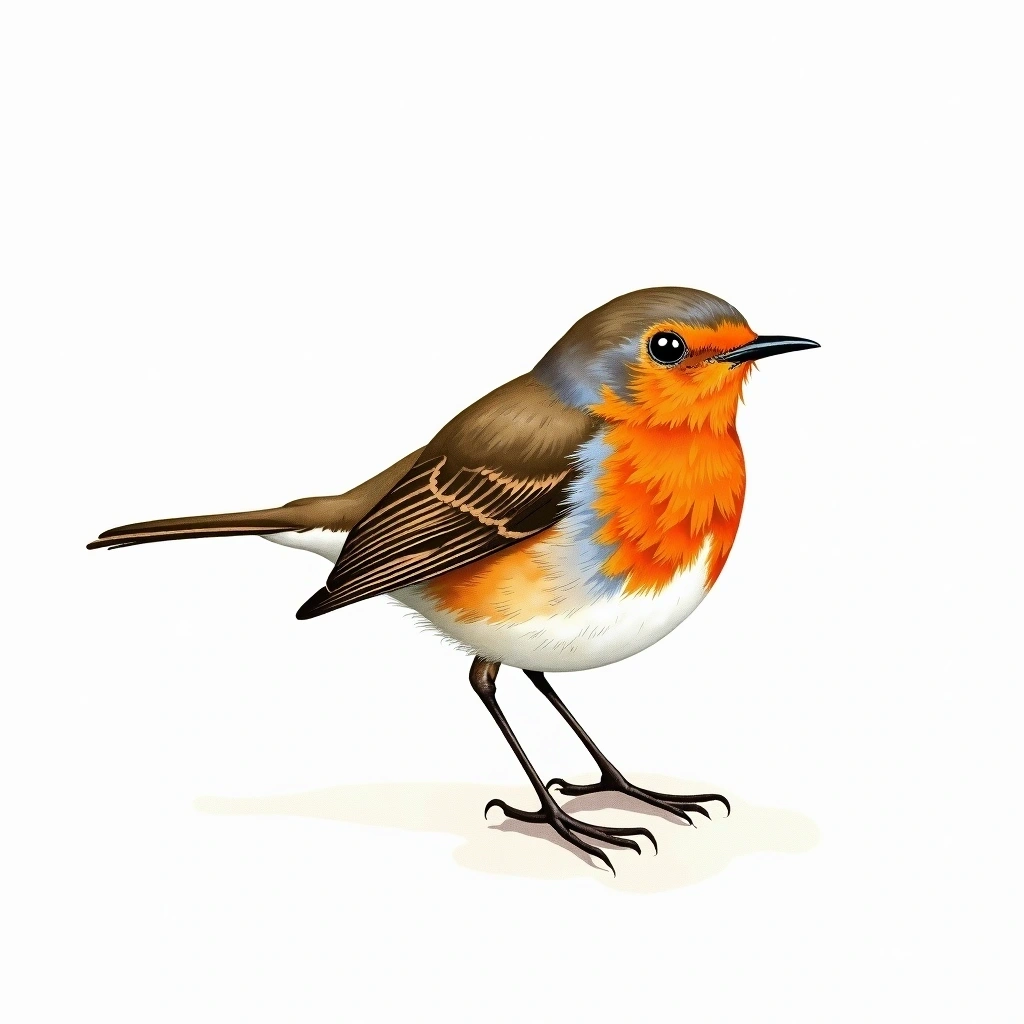
American Robin
Turdus migratorius
Embed This Widget
Add the script tag and a data attribute to embed this widget.
<script src="https://cdn.jsdelivr.net/npm/birdfyi-embed@1/dist/embed.min.js" defer></script>
<div data-birdfyi="bird" data-slug="american-robin"></div>Embed via iframe for maximum compatibility.
<iframe src="https://birdfyi.com/iframe/bird/american-robin/" width="420" height="400" frameborder="0" style="border:0;border-radius:10px;max-width:100%" loading="lazy"></iframe>Paste this URL in WordPress, Medium, or any oEmbed-compatible platform.
https://birdfyi.com/bird/american-robin/Add a dynamic SVG badge to your README or docs.
[](https://birdfyi.com/bird/american-robin/)Use the native HTML custom element.
<script src="https://cdn.jsdelivr.net/npm/birdfyi-embed@1/dist/embed.min.js" defer></script>
<birdfyi-bird slug="american-robin"></birdfyi-bird>A familiar thrush of North American lawns, parks, and gardens, the American Robin is known for hunting earthworms by running, stopping, and cocking its head to locate prey in the soil, though it also takes insects and fruit. Grey-brown above with a warm brick-red breast and belly, it shows a white eye-ring and streaked white throat, the female slightly paler than the male. It ranges from Alaska and Canada to Mexico; northern populations move south in winter while southern ones remain largely resident. Cup nests hold two to four eggs, incubated for 12 to 14 days, with young leaving the nest after just 9 to 16 days. Its clear, caroling song of short phrases — often rendered 'cheerily, cheer-up, cheerio' — is among the first sounds of a temperate dawn. The species is classified as Least Concern.
On this page
À propos
The American robin is widely regarded as a harbinger of spring across North America. Despite its name, it is a true thrush unrelated to the European robin. American robins produce two to three broods per year and are among the earliest birds to sing in the morning chorus.
Physical Description
| Measurement | Value | Imperial |
|---|---|---|
| Body Length | 25,0 cm | 9.8 in |
| Envergure | 36,0 cm | 14.2 in |
| Poids | 77,0 g | 2.72 oz |
Identification
Plumage
Dark grey-brown upperparts with a warm brick-red breast and belly. White eye-ring and streaked white throat. Female slightly paler.
Bec
Bright yellow bill with a dark tip
Habitat & Range
Lawns, parks, gardens, farmland, and forest edges. One of the most familiar birds in suburban North America.
Répartition géographique
North America from Alaska and Canada to Mexico. Northern populations migrate south in winter; southern populations are largely resident.
Diet & Feeding
Earthworms, insects, and fruit. Famously hunts earthworms on lawns by running, stopping, and tilting its head to locate prey.
Statut de conservation
Comportement et reproduction
Nidification
Nest type: CP. Incubation: 12-14 days. Fledging: 9-16 days.
Taille de la couvée
2-4
Son
Chant
A clear, caroling song of 2-3 note phrases: 'cheerily, cheer-up, cheerio'. Sings from dawn perches. Sharp 'tut-tut-tut' alarm call and thin 'seeee' flight note.
Taxonomie
| Kingdom | Animalia |
| Phylum | Chordata |
| Class | Aves |
| Ordre | Passeriformes (Songbirds) |
| Famille | Turdidae (Thrushes) |
| Genus | Turdus |
| Espèces | Turdus migratorius |
Names in Other Languages
| Language | Name |
|---|---|
| German | Wanderdrossel |
| Spanish | Petirrojo Americano |
Distribution
American Robin has been recorded in 8 countries.
countries highlighted
External Databases
Foire aux questions
What does the American Robin eat?
Where does the American Robin live?
Is the American Robin endangered?
How does the American Robin nest?
What does the American Robin sound like?
How big is the American Robin?
What order and family does the American Robin belong to?
Similar Birds
Other species in the Turdidae family