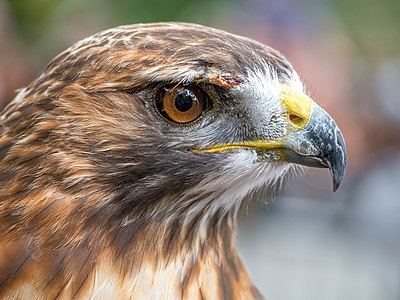
Rotschwanzbussard
Buteo jamaicensis
Embed This Widget
Add the script tag and a data attribute to embed this widget.
<script src="https://cdn.jsdelivr.net/npm/birdfyi-embed@1/dist/embed.min.js" defer></script>
<div data-birdfyi="bird" data-slug="red-tailed-hawk"></div>Embed via iframe for maximum compatibility.
<iframe src="https://birdfyi.com/iframe/bird/red-tailed-hawk/" width="420" height="400" frameborder="0" style="border:0;border-radius:10px;max-width:100%" loading="lazy"></iframe>Paste this URL in WordPress, Medium, or any oEmbed-compatible platform.
https://birdfyi.com/bird/red-tailed-hawk/Add a dynamic SVG badge to your README or docs.
[](https://birdfyi.com/bird/red-tailed-hawk/)Use the native HTML custom element.
<script src="https://cdn.jsdelivr.net/npm/birdfyi-embed@1/dist/embed.min.js" defer></script>
<birdfyi-bird slug="red-tailed-hawk"></birdfyi-bird>Few raptors are as familiar across North America as the Red-tailed Hawk, which ranges from Alaska to Panama and adapts readily to farmland, grassland, roadsides, and suburbs. Plumage varies from pale to dark morphs, but most adults show rich brown upperparts, a pale breast with a dark belly band, and the rufous-red tail that gives the bird its name. It hunts small to medium mammals — especially voles, mice, and rabbits — from high perches or on the wing, also taking birds, reptiles, and large insects. Nests hold two to four eggs, incubated for 28 to 35 days, with young fledging at 42 to 46 days. Its raspy, descending scream is so evocative that films routinely dub it over footage of other raptors. The species is classified as Least Concern.
On this page
Über uns
Der Rotschwanzbussard ist der am weitesten verbreitete und häufigste Bussard Nordamerikas. Sein durchdringender Schrei ist so unverkennbar, dass er in Film und Fernsehen oft über Aufnahmen von Weißkopfseeadlern gelegt wird. Diese anpassungsfähigen Greifvögel gedeihen in vom Menschen geprägten Landschaften und sind ein vertrauter Anblick auf Masten entlang von Autobahnen.
Physical Description
| Measurement | Value | Imperial |
|---|---|---|
| Body Length | 53,0 cm | 20.9 in |
| Flügelspannweite | 124,0 cm | 48.8 in |
| Gewicht | 1080,0 g | 38.10 oz |
Identifizierung
Gefieder
Variable plumage from pale to dark morphs. Most adults have rich brown upperparts, a pale breast with a dark belly band, and the characteristic rufous-red tail.
Schnabel
Dark hooked bill with a yellow cere
Habitat & Range
Open country with scattered elevated perches such as trees, poles, and cliffs. Adaptable to farmland, grasslands, roadsides, and suburban areas.
Geografisches Verbreitungsgebiet
North America from Alaska to Panama, including the Caribbean. One of the most common raptors in North America.
Diet & Feeding
Small to medium mammals, especially voles, mice, and rabbits. Also takes birds, reptiles, and large insects. Hunts from elevated perches or while soaring.
Erhaltungsstatus
Verhalten & Brutverhalten
Nistverhalten
Incubation: 28-35 days. Fledging: 42-46 days.
Gelegegröße
2-4
Lautgebung
Gesang
Iconic, raspy descending scream: 'kreeeeee-ar', often used in films for all raptors. Gives short barking 'kak' notes near nest. Juveniles beg with persistent squealing whistles.
Taxonomie
| Kingdom | Animalia |
| Phylum | Chordata |
| Class | Aves |
| Ordnung | Accipitriformes (Habichtartige) |
| Familie | Accipitridae (Habichte, Adler und Milane) |
| Genus | Buteo |
| Arten | Buteo jamaicensis |
Names in Other Languages
| Language | Name |
|---|---|
| Arabic | باز أحمر الذيل |
| Chinese | 红尾鵟 |
| French | Buse à queue rousse |
| German | Rotschwanzbussard |
| Indonesian | Elang ekor-merah |
| Japanese | アカオノスリ |
| Korean | 붉은꼬리말똥가리 |
| Portuguese | Búteo-de-cauda-vermelha |
| Russian | Краснохвостый сарыч |
| Spanish | busardo colirrojo |
| Turkish | Kızıl kuyruklu şahin |
Distribution
Rotschwanzbussard has been recorded in 7 countries.
countries highlighted
External Databases
Häufig gestellte Fragen
What does the Rotschwanzbussard eat?
Where does the Rotschwanzbussard live?
Is the Rotschwanzbussard endangered?
How does the Rotschwanzbussard nest?
What does the Rotschwanzbussard sound like?
How big is the Rotschwanzbussard?
What order and family does the Rotschwanzbussard belong to?
Similar Birds
Other species in the Accipitridae family