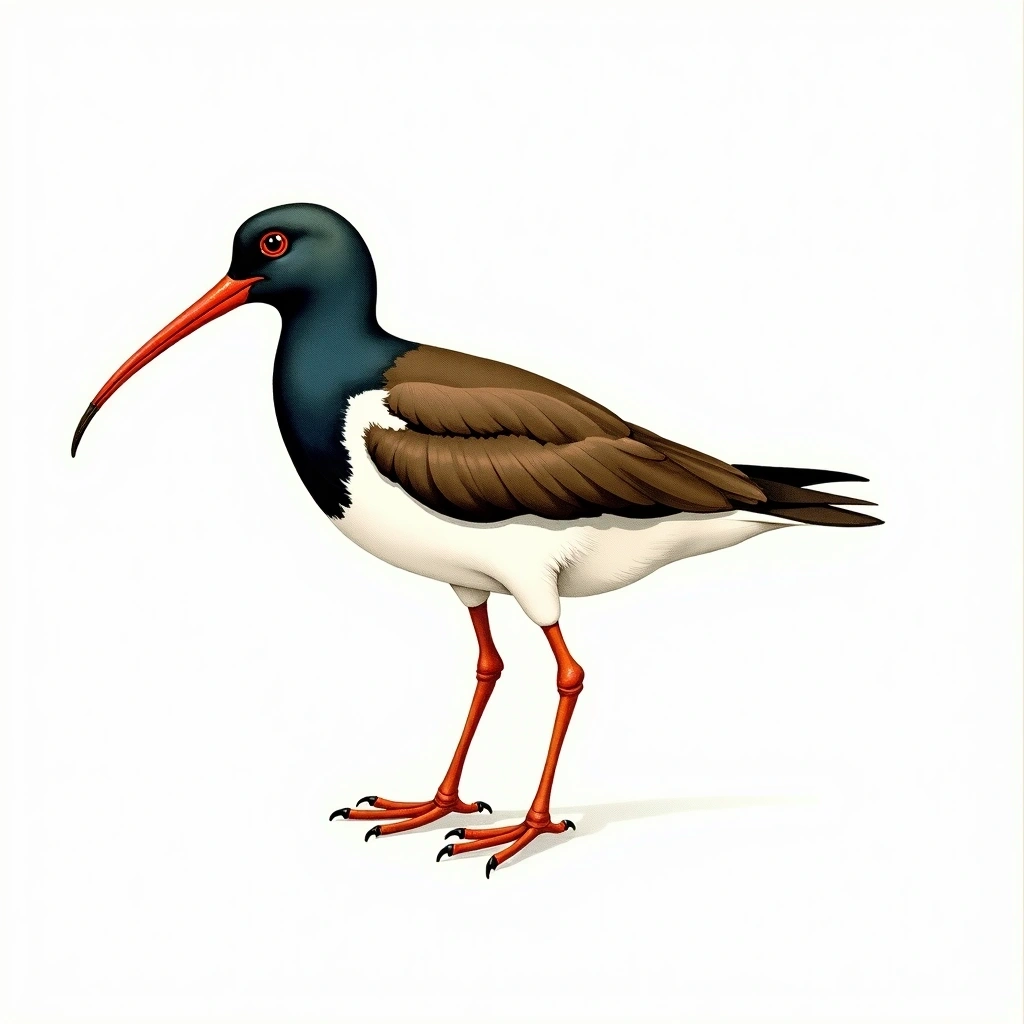
African Oystercatcher
Haematopus moquini
Embed This Widget
Add the script tag and a data attribute to embed this widget.
<script src="https://cdn.jsdelivr.net/npm/birdfyi-embed@1/dist/embed.min.js" defer></script>
<div data-birdfyi="bird" data-slug="haematopus-moquini"></div>Embed via iframe for maximum compatibility.
<iframe src="https://birdfyi.com/iframe/bird/haematopus-moquini/" width="420" height="400" frameborder="0" style="border:0;border-radius:10px;max-width:100%" loading="lazy"></iframe>Paste this URL in WordPress, Medium, or any oEmbed-compatible platform.
https://birdfyi.com/bird/haematopus-moquini/Add a dynamic SVG badge to your README or docs.
[](https://birdfyi.com/bird/haematopus-moquini/)Use the native HTML custom element.
<script src="https://cdn.jsdelivr.net/npm/birdfyi-embed@1/dist/embed.min.js" defer></script>
<birdfyi-bird slug="haematopus-moquini"></birdfyi-bird>The African Oystercatcher (Haematopus moquini) is a bird species in the family Haematopodidae (oystercatchers), within the order Charadriiformes (shorebirds & gulls). Recorded measurements include a wingspan of 53.4 cm and a weight of 690.3 g. The IUCN Red List classifies it as Least Concern.
On this page
About
African Oystercatcher (Haematopus moquini) is a large 42–46 cm all-black oystercatcher endemic to South Africa and Namibia. Glossy black plumage; orange-red bill; pinkish legs; orange eye ring. Inhabits sandy beaches, rocky shores, and tidal flats along the southern African coast.
Physical Description
| Measurement | Value | Imperial |
|---|---|---|
| Wingspan | 53.4 cm | 21.0 in |
| Weight | 690.3333333333334 g | 24.35 oz |
Habitat & Range
Conservation Status
Behavior & Breeding
Nesting
Nest type: SC. Incubation: 27-39 days. Fledging: 35-40 days.
Clutch Size
1-2
Taxonomy
| Kingdom | Animalia |
| Phylum | Chordata |
| Class | Aves |
| Order | Charadriiformes (Shorebirds & Gulls) |
| Family | Haematopodidae (Oystercatchers) |
| Genus | Haematopus |
| Species | Haematopus moquini |
Distribution
African Oystercatcher has been recorded in 1 countries.
countries highlighted
External Databases
Frequently Asked Questions
Is the African Oystercatcher endangered?
How does the African Oystercatcher nest?
How big is the African Oystercatcher?
What order and family does the African Oystercatcher belong to?
Similar Birds
Other species in the Haematopodidae family